
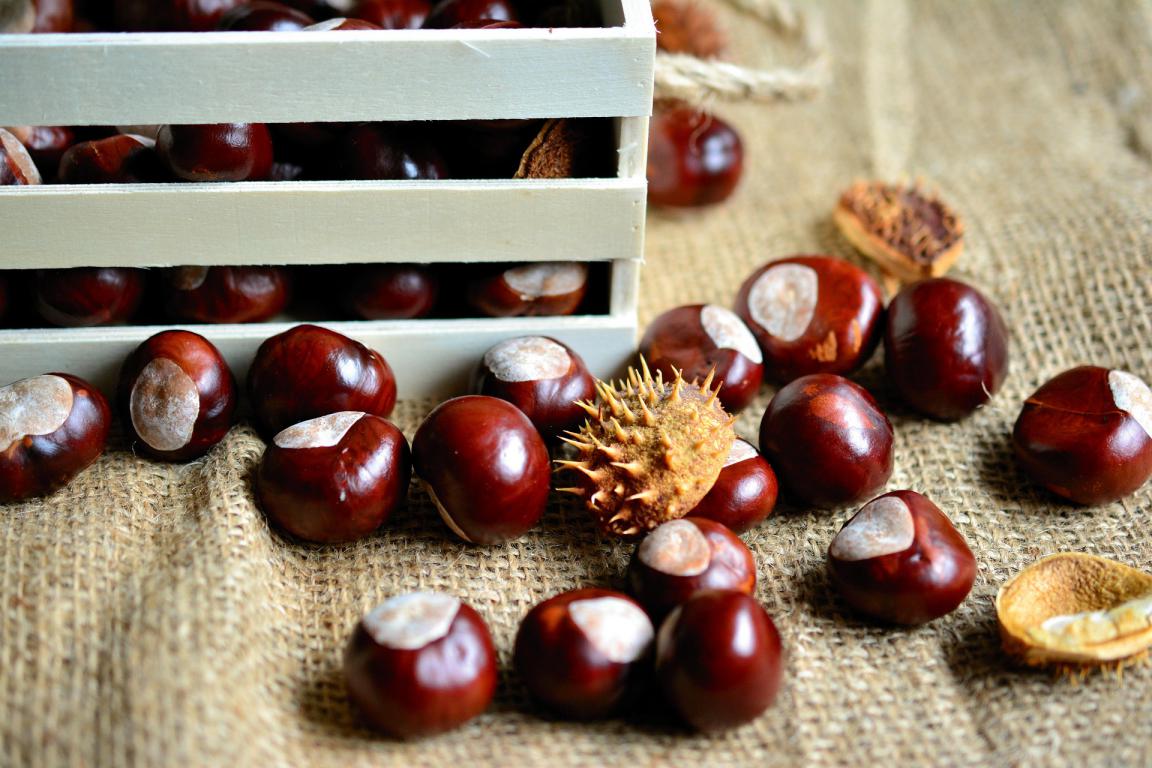
Chestnuts: health benefits, difference between Marroni and Chestnuts and easy oven recipe
Discover the difference between chestnuts and marroni, their health benefits, and an easy oven-roasted chestnut recipe for autumn.
Chestnuts: the authentic flavor of Autumn
As autumn arrives, the forests turn warm shades of red and gold, and the aroma of roasted chestnuts fills the air. A true symbol of the season, chestnuts connect us to tradition and to the comforting flavors of Italian cuisine.
Sweet, nourishing, and versatile, chestnuts are perfect for many dishes — from roasted chestnuts and chestnut cakes to soups and autumn desserts.
Rich in fiber, minerals, and complex carbs, they are a natural energy booster and, being gluten-free, suitable for all diets.
Chestnuts vs Marroni: what’s the difference?
Though often used interchangeably, they are not the same.
Wild chestnuts come from natural trees, are irregular in shape, and have a thin skin that’s harder to remove.
Marroni, instead, are cultivated varieties: larger, sweeter, and easier to peel — perfect for desserts and refined dishes.
Easy recipe: oven-roasted chestnuts
Try this simple way to enjoy the pure flavor of chestnuts.
Cut a 2–3 cm slit in each chestnut, soak them for two hours, then drain and dry. Bake them on a parchment-lined tray in a preheated static oven at 180°C / 350°F for 30 minutes.
Peel while warm and serve with a glass of red wine — a delicious autumn classic.
The Autumn comfort food that warms the soul
Whether enjoyed by the fireplace or while walking among fallen leaves, chestnuts remain one of autumn’s simplest and most comforting pleasures. A humble fruit that celebrates the beauty of nature and the warmth of tradition.